
Compare on-grid, off-grid and hybrid inverter options by the system they need to support. Check PV voltage and current limits, electrical phase, storage compatibility and monitoring requirements against the exact model datasheet. The listed 3 kW on-grid model is labelled 5G Pro Max; confirm its current features, availability and warranty before ordering.
ARISE On-Grid Inverter
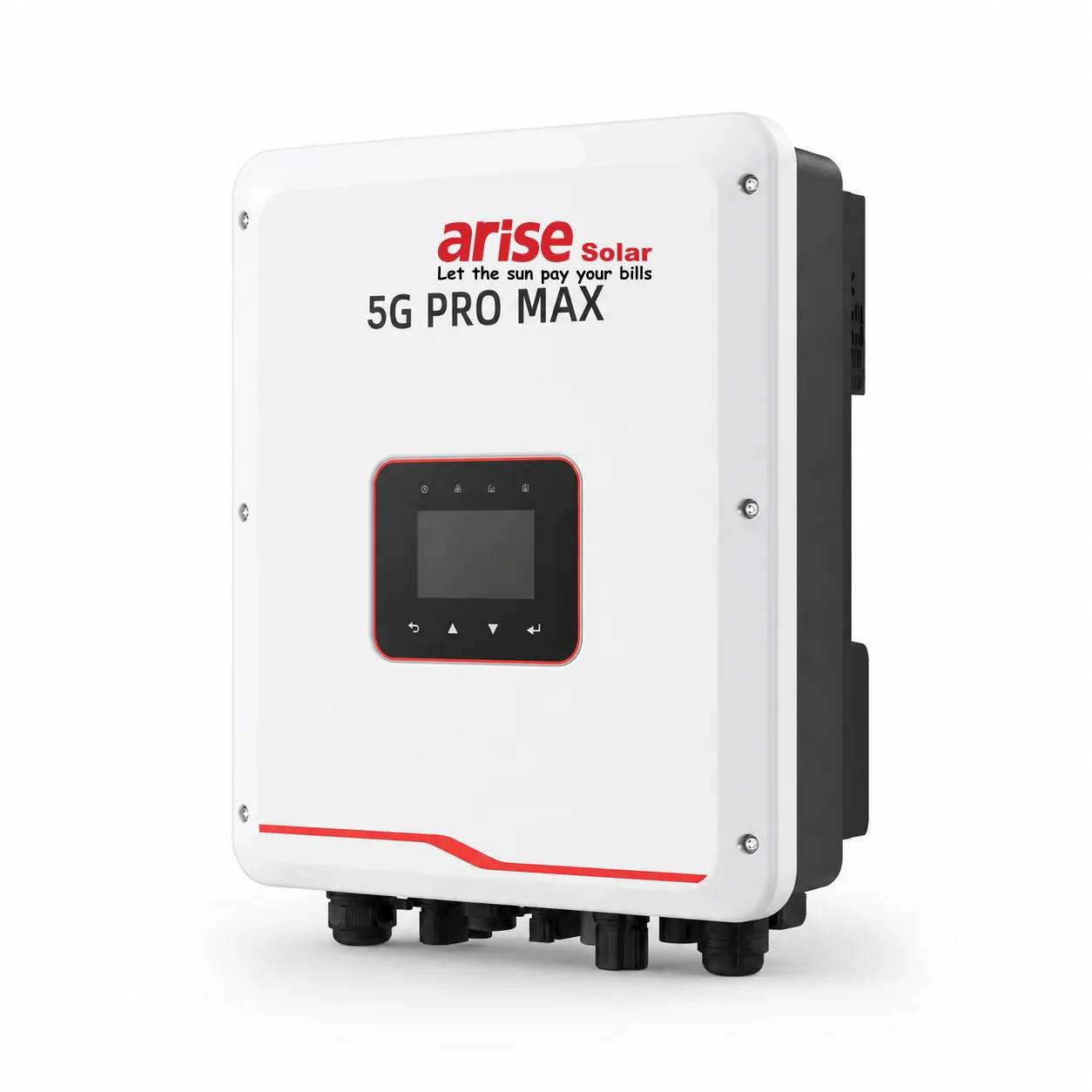
4 KW
Coming Soon
5 KW
Coming Soon
10 KW
Coming Soon
ARISE Off-Grid Inverter
3 KW
Coming Soon
4 KW
Coming Soon
5 KW
Coming Soon
10 KW
Coming Soon
ARISE Hybrid Inverter
3 KW
Coming Soon
4 KW
Coming Soon
5 KW
Coming Soon
10 KW
Coming Soon
Inverter features to check before ordering
| Dual MPPT Technology | Confirm the number of independent MPPT inputs and the permitted string arrangement. Separate inputs do not eliminate shading losses. |
|---|---|
| Conversion efficiency | Compare rated and weighted conversion efficiency under the stated test conditions. |
| Output and overload limits | Check the permitted AC output and any overload limits for the exact model and operating mode. |
| Cooling and ventilation | Confirm the cooling method, acoustic information, ventilation and installation clearances in the datasheet. |
| Smart Monitoring | Check which display, app or data connection is supported and what access is supplied at handover. |
| Multiple Protections | Verify the documented protection functions and the external AC/DC protection required by the system design. |
Related Categories
Enquire About Solar Inverters
Check compatibility before selecting an inverter
Confirm the array voltage and current, MPPT limits, electrical phase and permitted capacity against the exact model datasheet. For storage, check the supported battery type, usable energy and backup circuit design.
Dealer and wholesale enquiries should identify model, quantity and delivery location. The listed range does not establish current inventory or dealership authorisation; confirm commercial terms directly.
Choose the architecture before choosing kW
Start with grid availability and whether loads must run during an outage. Conventional on-grid equipment is intended for grid-connected generation and stops when the utility supply fails. Off-grid and hybrid designs require their own storage, control and safety assessment.
Then check connection phase, PV array details, essential load starting demand and the proposed mounting location. A model with a similar capacity label is not automatically an interchangeable replacement.
Review the inverter datasheet with the string design
Check allowed DC voltage and current, the operating MPPT range, inputs and permitted array capacity. The system designer should verify the string arrangement under relevant conditions. For storage, confirm the supported battery chemistry, voltage and communication.
Monitoring, protection functions, enclosure suitability and operating temperature limits vary by model. Request the exact documentation instead of assuming that every listed capacity shares the same features.
Plan installation and support access
The equipment location needs manufacturer-compliant ventilation, clearances, environmental protection and safe service access. Keep operating instructions and fault-code information available after commissioning.
For replacement or bulk procurement, include the current model, required quantities, site details and compatibility requirements. Confirm whether the quote includes removal, installation, configuration, delivery and testing.
Clear answers
Frequently asked questions
What does a solar inverter do?
A solar inverter converts DC electricity from photovoltaic modules into AC electricity suitable for connected loads or an approved grid connection.
How do on-grid, off-grid and hybrid inverters differ?
On-grid models synchronise with the utility; off-grid models support an independent system; hybrid models can manage compatible solar, grid and storage arrangements.
Which inverter capacity should I choose?
Selection depends on the PV array, connected loads, electrical phase, string design and backup requirements. Ask for a design check against the exact model datasheet.
What is MPPT?
Maximum Power Point Tracking adjusts the operating point of connected solar strings to help capture available power within the inverter's rated limits.
Why do string voltage and current matter?
The array must remain within the inverter's permitted voltage and current limits under relevant operating conditions. Incompatible strings can damage equipment or reduce performance.
Does every solar inverter provide backup?
No. Conventional on-grid models stop during outages. Backup needs a compatible inverter, storage, protected circuits and an appropriate isolation design.
Can I add batteries later?
Only if the selected inverter and system design support the intended battery type and configuration. Confirm compatibility before buying the inverter.
Should I choose single-phase or three-phase equipment?
Match the property's connection and the utility-approved design. Do not choose phase configuration only from system capacity or price.
Can the inverter be installed outdoors?
Only when its enclosure rating, operating limits and installation instructions permit the chosen location. Keep ventilation and service access clear.
What information is needed for an inverter quotation?
Share the desired system type, PV module details, array capacity, electricity phase and any battery or backup-load requirements.
How do I confirm inverter warranty and monitoring features?
Request the current model datasheet, warranty terms and monitoring documentation. Features can differ between capacities and product families.
Can I enquire about dealer or wholesale supply?
Yes, use the enquiry form to specify model, quantity and destination. Availability, dealer arrangements and commercial terms require confirmation.